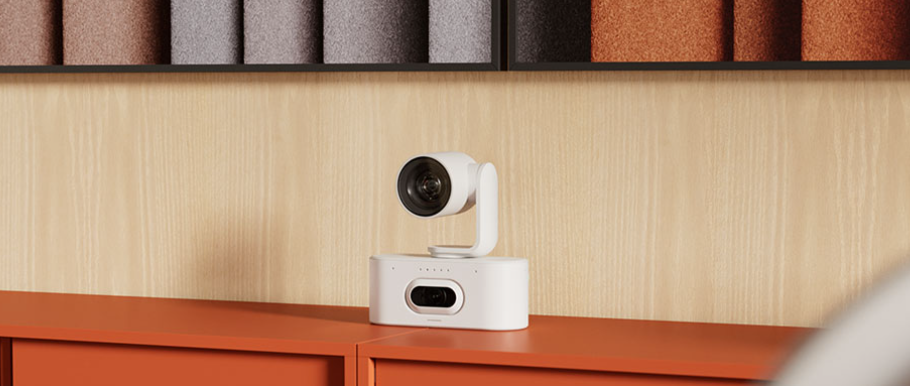
Logitech is positioning its new Rally AI Camera and Rally AI Camera Pro as lower-profile alternatives to bulky conference room video systems.
Instead of traditional video bars, the devices use smaller camera units built around one-inch imaging sensors and automated features designed to support both video quality and room management.
They also function as room sensors, combining imaging with AI-based tracking and analytics capabilities.
That approach places Logitech in direct competition with established all-in-one video bars and modular conferencing systems, shifting AI typically embedded in those systems into a dedicated camera format.
AI-powered tracking is already common, but Logitech is emphasizing mounting flexibility and pricing. Most enterprise-grade dual-camera systems for large rooms often exceed $5,000 to $10,000.
The Rally AI Camera Pro is priced at $2,999, while the Rally AI Camera is priced at $2,499.
“Rally AI Cameras are designed to power the hybrid-first office, where the tech fades into the background to let the digital and physical worlds blend,” said Henry Levak, VP of product at Logitech for Business.
“From small walls to town halls, they provide a cinematic experience for meeting attendees while quietly solving problems that IT managers, facilities teams, and workplace experience professionals face every day.”
AI Video Enhances Meeting Views
Logitech combines features from its existing Rally systems with AI-based video capabilities typically found in larger devices. According to Logitech, compact multi-camera views capture every perspective in boardrooms, classrooms, and town hall spaces. They can work in tandem for setups like Zoom Intelligent Director and Microsoft Teams.

The setup is designed to create more dynamic meeting views through multi-camera coordination, with both cameras featuring a custom-designed lens with a one-inch imaging sensor and a 115° field of view, enabling wide room coverage and individual close-ups, even in low-light conditions.
The cameras can be mounted on the ceiling, TV display, on a wall, or recessed within a wall. An automatic shutter indicates when the camera is off.
According to Nathan Coutinho, global head of strategy at Logitech for Business, the in-wall mounting and sleek design suggest a move toward invisible technology. Historically, conference room technology did not integrate into the room. It occupied it. But workplaces, especially executive spaces, boardrooms, and customer-facing environments, increasingly prioritize clean sightlines, minimal visual noise, and flexibility in multi-use spaces.

The Rally AI camera can be recessed into walls, supporting a lower-profile approach to conference room design.
“Ultimately, this isn’t just about aesthetics, though that’s a big plus for architects and workplace designers, but about removing distractions. Visual noise, like a camera protruding, can be a real productivity killer. In that sense, moving toward nearly-invisible technology makes sense for the industry, and we do expect that trend to continue,” he told TechNewsWorld.
Coutinho added that a plug-and-play camera priced under $3,000 lowers the entry barrier to professional video meetings. This shift enables organizations, regardless of budget or technical expertise, to deploy more advanced video setups without costly installations or specialized staffing.
“One goal of the Rally AI Cameras is to democratize access to sophisticated yet simple video capabilities to more organizations,” he offered.
AI Framing Reduces Need for PTZ
Both cameras use RightSight 2 AI framing to adjust the view based on participants in the room, adapting in real time to frame the group, individual speaker, or arrange participants in a grid.
They support multiple mounting options, including wall and in-wall installation, allowing them to blend into a range of room designs.

The Rally AI camera uses AI-based framing and high-resolution imaging to reduce the need for mechanical pan-tilt-zoom movement.
With a one-inch imaging sensor and RightSight 2 AI, the camera automatically focuses and frames participants in the room. It is designed to integrate with a range of room layouts, with options to mount the camera on the wall or recess it into the wall for a truly subtle presence.
Large mechanical PTZ systems traditionally signaled capability through sweeping pans, audible motors, and visible hardware. Logitech’s one-inch sensors and hybrid AI-driven zoom may be reaching a tipping point, Coutinho suggested.
“When you have abundant pixels and intelligent reframing, dramatic mechanical motion becomes less necessary. In today’s meeting room environments, the highest standard isn’t visible movement. It’s invisible intelligence,” he said.
Room Data Shifts ROI Calculations
Coutinho agreed that this data-driven approach changes the ROI calculation for office footprints. Room usage data may change how organizations evaluate office space utilization.
They detect when, how many, and how often people use rooms and feed that data into Logitech Sync. The process provides workplace managers with the information needed to plan spaces more effectively, he explained.
For example, one of the biggest drains on corporate real estate budgets is the ghost meeting — booked rooms but no one shows up. Rally AI Cameras can detect whether people actually show up, and if not, automatically release the room so others can use it.
“In a way, this increases the amount of square footage you can use without leasing more space,” he suggested. “You’re not just buying an enterprise conference camera. You’re buying visibility into how your spaces are actually being used.”
The Rally AI Camera Pro is a pan-tilt-zoom (PTZ) camera with powerful optics and smart features for larger, complex spaces. It delivers crystal clear video with an advanced dual-camera system and 15x hybrid zoom.
AI-based RightSight 2 technology intelligently focuses and frames people in meeting rooms as if they were up close. Simple integration with conference audio systems makes it easy to deploy intelligent video and pro audio together, while occupancy insights can drive workplace automation.
Integrated Hardware and Software Approach
Coutinho noted that Logitech’s Rally AI Cameras combine hardware, software, and analytics into a single platform. The platform includes occupancy analytics, environmental sensing from Logitech Spot, and AI-powered capabilities updated through CollabOS.
“Another key product differentiator is our easy integration with popular platform-specific features. Rally AI Cameras integrate with Zoom Rooms and Microsoft Teams Rooms, enabling natural, equitable framing across multiple perspectives in multi-camera setups,” he offered.

The Rally AI camera integrates with conference room audio systems as part of a modular video collaboration setup.
These capabilities position the Rally AI cameras as art of a broader move toward more flexible, data-aware meeting room systems.
Product Specifications
Logitech expects to begin shipping the two products this summer. Key specifications include:
- Height: 91 mm (3.6 inches)
- Width: 224 mm (8.8 inches)
- Depth: 101 mm (4 inches). With an optional in-wall mount, the camera can be mounted flush with the wall.
- Camera Resolution: 4K, 1440p, 1080p, 900p, 720p, and SD at 30fps
- Zoom: 4x HD digital zoom
- Sensor: 20 MP, 1 inch
- Field of View: Diagonal: 115.7°; Horizontal: 103.3°; Vertical: 60.7°
The Rally AI cameras highlight growing demand for smarter, more adaptable meeting room technology. As hybrid work evolves, systems that combine video, analytics, and seamless integration are becoming central to how organizations rethink their spaces.
The images featured in this article are courtesy of Logitech.
More in Audio/Video
Should technology play a bigger role in sports officiating?
Yes, technology improves accuracy and fairness
Keep the current balance of officials and technology
About the Author